Summer Fuel Evaporation and Car Mileage in Pakistan: How 45°C+ Heat Impacts Your Fuel Tank
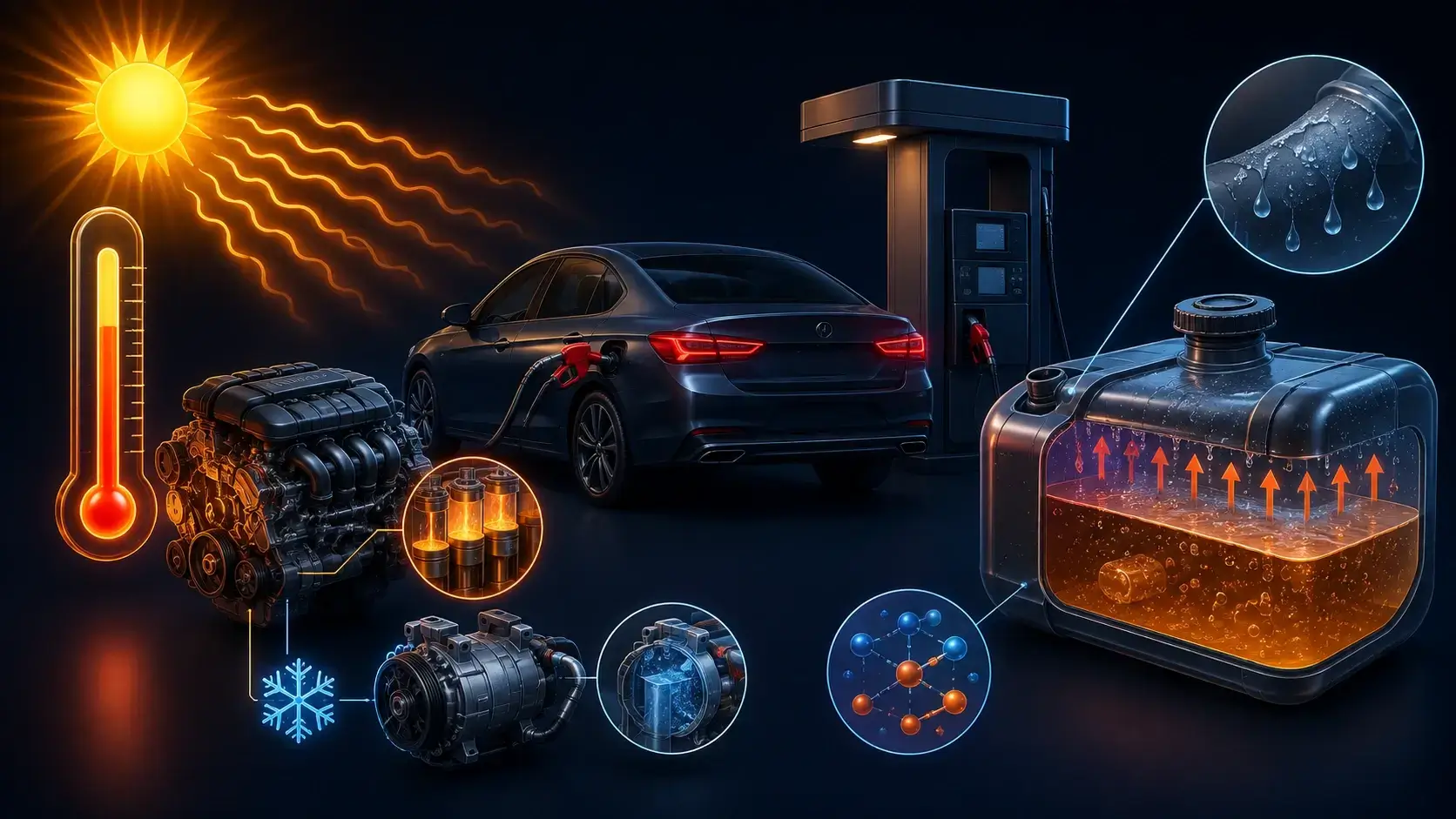
- Thermal Density Shift: Fuel expands $\approx 1.2\%$ per 10°C increase in temperature; dispensing from cool underground tanks in the early morning maximizes mass per litre.
- AC Compressor Load: Continuous climate control in 45°C+ heat increases engine fuel consumption by 15% to 22% in stop-and-go city transit.
- EVAP Purge Overhead: High tank heat saturates charcoal canisters, leading to rich fuel mixtures during initial ignition cycles.
LAHORE — During peak summer months across Punjab, Sindh, and Khyber Pakhtunkhwa, ambient temperatures routinely exceed 42°C to 48°C. For motorists across Pakistan, this extreme heat correlates with a noticeable drop in vehicle fuel economy (km/L). The degradation is driven by specific thermodynamic mechanisms: volumetric thermal expansion of gasoline, evaporative fuel loss, and heavy alternator/compressor parasitic drag.
1. Fuel Density Physics & Thermal Expansion
Unlike compressed natural gas (CNG), liquid petroleum is sold volumetrically by the litre rather than by mass (kg). The coefficient of volumetric expansion for motor gasoline is approximately 0.00095 per °C. When fuel is stored in underground station reservoirs, it stays at a relatively stable 20°C to 24°C. Dispensing fuel into a vehicle tank during peak 2:00 PM heat causes rapid expansion and vapor loss before it reaches the combustion chamber.
2. AC Compressor Parasitic Drag on Small Engines
Air conditioning systems place a significant mechanical load directly onto the crankshaft via the serpentine belt. In a 660cc Kei car or 1000cc hatchback, operating the AC compressor on maximum settings consumes between 2.5 to 4.5 horsepower—which represents up to 8% of the engine’s total output. In bumper-to-bumper traffic across urban centers like Lahore or Karachi, this parasitic drag leads directly to a 20%+ increase in fuel burn. You can calculate your summer commuting budget using our daily commute calculator.
3. Hot Intake Air & Knock Retardation
Hot ambient air is less dense than cold air, providing fewer oxygen molecules per intake cycle. Furthermore, elevated intake manifold temperatures significantly increase cylinder knock tendency. As detailed in our guide on High-Octane (97 RON) vs Regular Petrol (92 RON), an engine ECU will automatically retard ignition timing in severe heat to prevent engine knocking, which lowers thermal efficiency and reduces mileage.
- Refuel Before 8:00 AM: Underground fuel is coldest and densest in the early morning.
- Avoid Overfilling (“Auto-Click” Rule): Stop pumping when the nozzle clicks to leave vapor expansion volume in the tank.
- Cabin Purge Strategy: Roll windows down for 60 seconds after parking in the sun before turning the AC compressor to maximum.
2 thoughts on “Summer Fuel Evaporation & Mileage in Pakistan: 45°C Heat Impact Guide”